


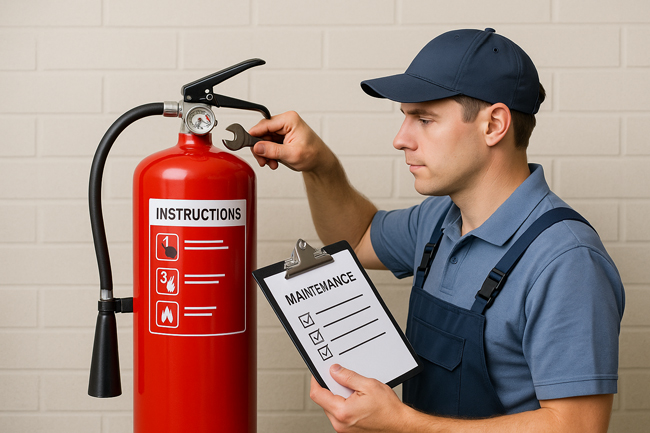
Fire Extinguisher Maintenance
Proper maintenance of fire extinguishers is essential to ensure they function effectively in the event of a fire emergency. Regular inspection, servicing, and refilling are not only best practices but are also mandated by safety regulations.
Key Aspects of Fire Extinguisher Maintenance:
Monthly Visual Inspections
- Check that the extinguisher is in its designated place.
- Ensure the pressure gauge is in the operable range.
- Verify the safety pin is intact and the seal is unbroken.
- Inspect for physical damage, corrosion, or leakage.
Annual Maintenance
- Conducted by certified fire safety professionals.
- Includes detailed internal and external inspection.
- Ensure proper functioning of all components.
Refilling and Recharging
- Must be done *immediately after any use*, even if only partially discharged.
- Also required if pressure is low or after the manufacturer’s recommended period.
Hydrostatic Testing
- Required every 5 to 12 years (depending on extinguisher type).
- Tests the integrity of the cylinder under pressure.
Record Keeping
- Maintain logs of all inspections, maintenance, and servicing.
- Tag extinguishers with the date of last service and next due check.
Compliance Reminder:
National fire safety laws require that all fire extinguishers be properly maintained and refilled according to statutory guidelines. Failure to comply may result in penalties and increased risk during emergencies.